We concluded the last day of our seed saving training in Yangon on Friday. Â Covering topics of how to store seeds, more about the importance of germination, check and information management, we continued discussions with MBC staff and farmers about linkages between seed saving and sustainable thinking. Â Kimberly shared findings from her year-long study of managing pests in stored seeds and I put on my plant biology hat to talk about seeds as living potential and various ways to test seed quality through germination and planting out in soil. Â Attendees continued to share their methods for saving and testing seeds with the group.
There is a hunger for practical, income-generating techniques here in Myanmar and we’re privileged to be working with MBC as they continue to promote sustainable approaches with their farmers.
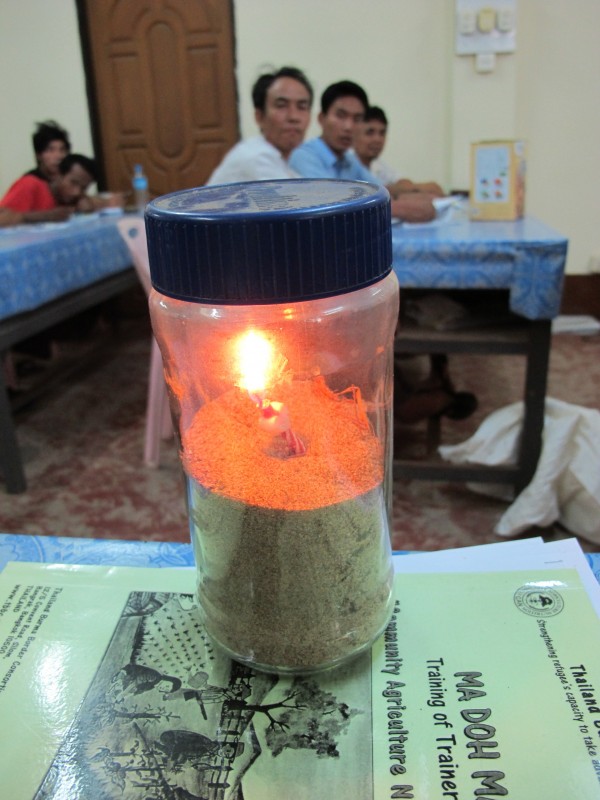
One of our attendees stores onion seeds by letting a candle extinguish inside a closed container to create a light vacuum.
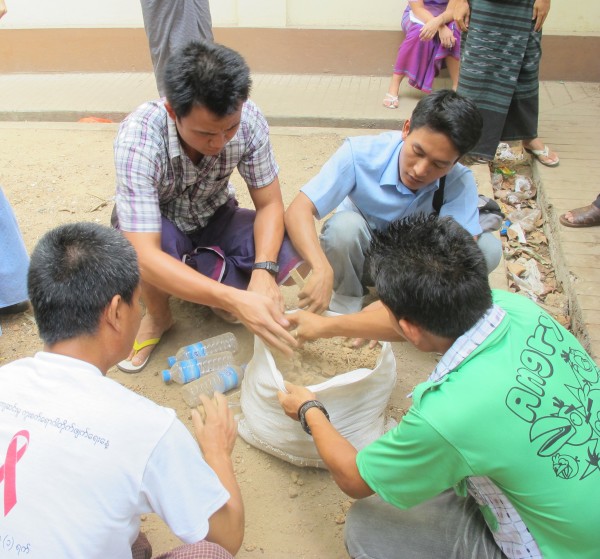
Demonstrating a sack garden, into which herbs and small vegetables can be planted
Today we had more lively discussions as workshop attendees talked about economic barriers to sustainable practices in their communities. Kim taught the difference between annual and perennial plants, phimosis the effects of day-length on growth and details of pollination.  In the afternoon, pestilence I led a discussion about cleaning and drying seeds before our whole group pitched in to clean seeds from local tomatoes, nurse pumpkin, ivy gourd and wax gourd.  So far, we’ve collected up to 15 varieties of seed to plant out at the seedbank, including  corn, bean, and pumpkin from Kayah State, and red sesbania from the Irrawaddy Delta area.

Taking notes during one of our many lively discussions
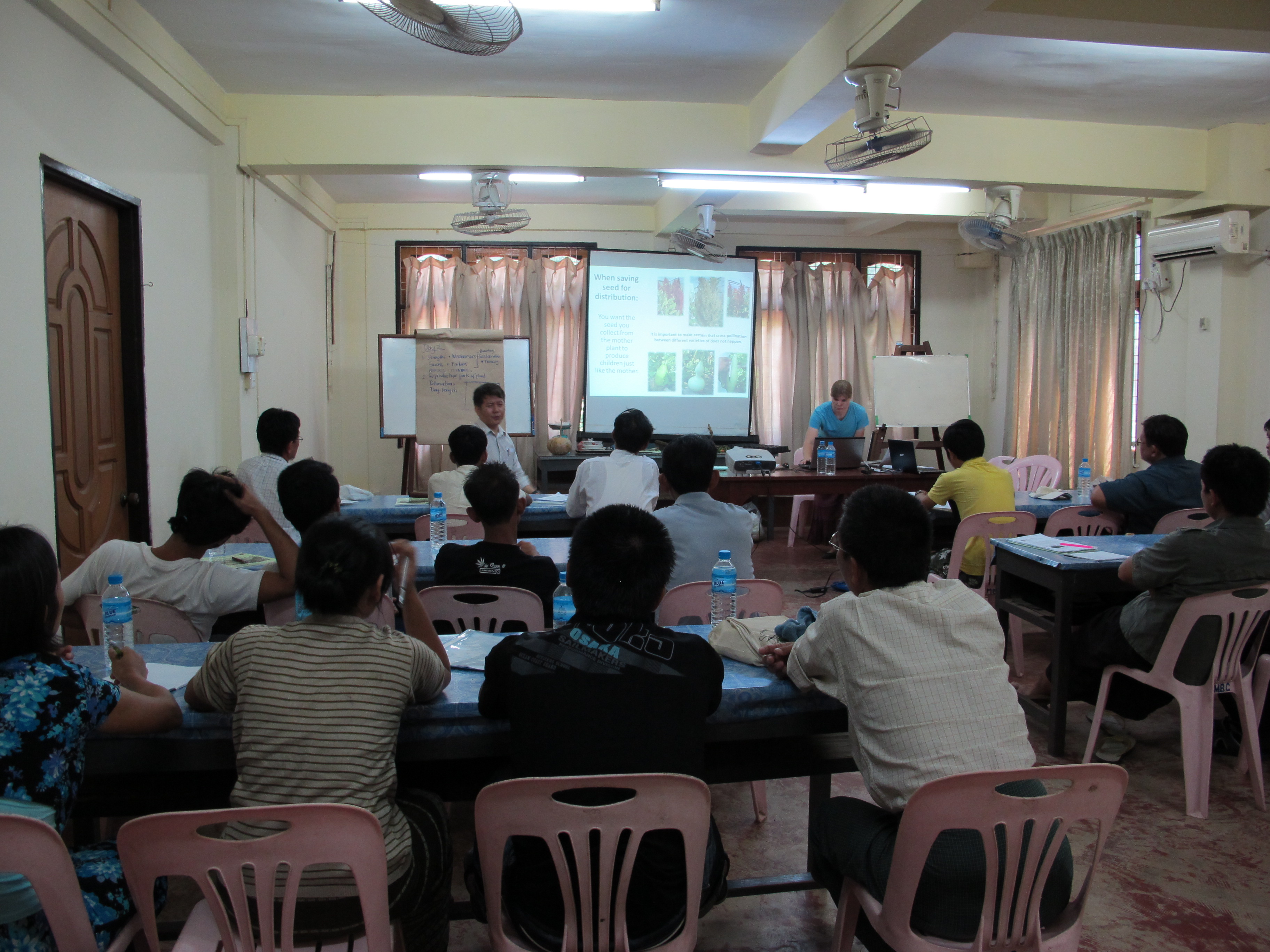
MBC staff spoke of lack of access to systematic information on sustainable farming practices, which hindered their ability to provide good resources to their communities whose livelihoods are dependent on farming.
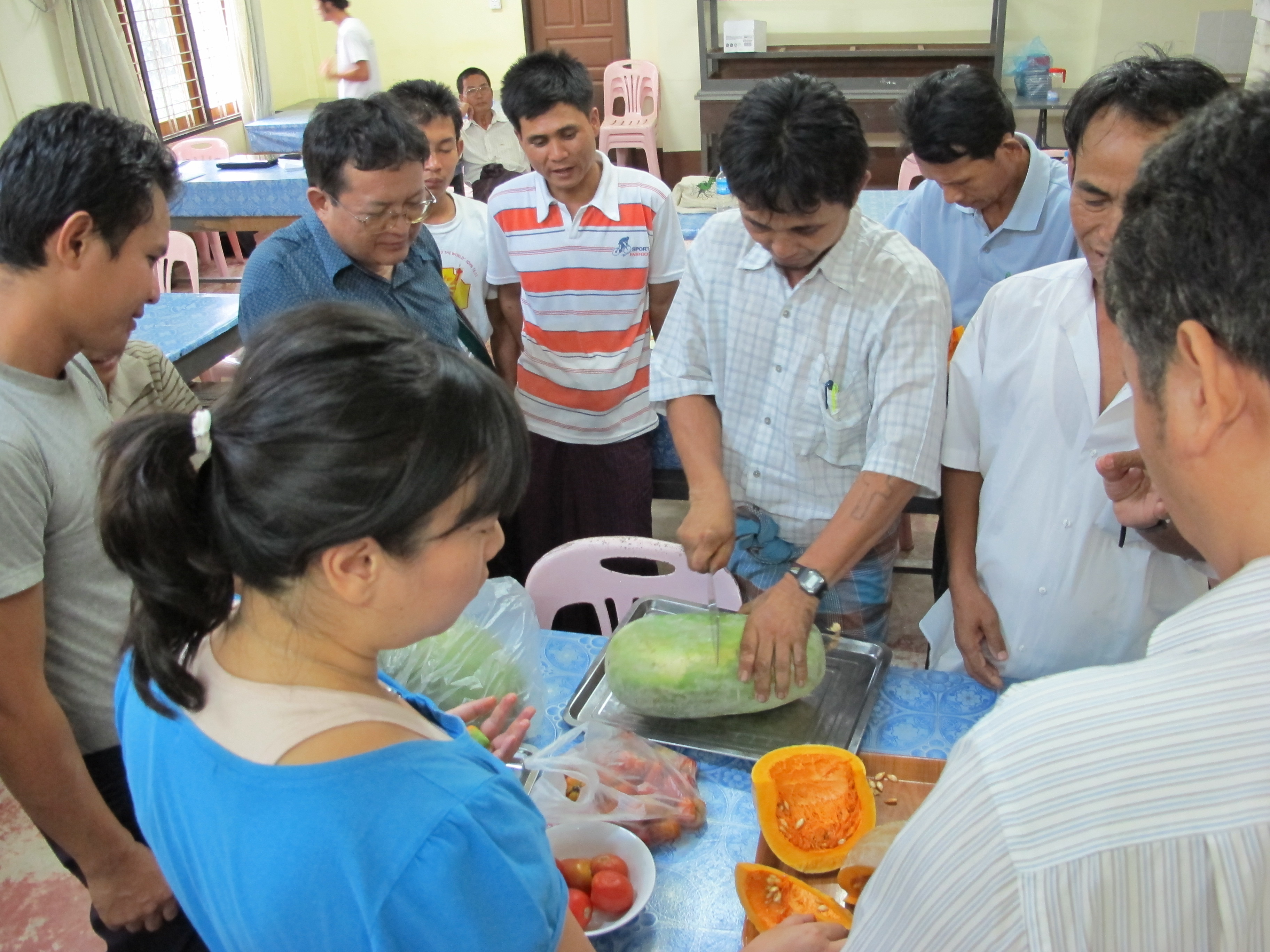
Our role is to help farmers recognize how their extensive, local knowledge works within a sustainable farming framework. Seed saving is a basic topic but we talked about it as a tool towards more sustainable practices and household income generation.


Drying seeds on a screen after cleaning
Celebrating 200 years in 2013, allergist Myanmar Baptist Convention (MBC) has over 2 million members from 18 different language groups throughout the country. Â The Christian Social Service and Development Department (CSSDD) functions like a development organization for its members, many of whom are farmers struggling to maintain their livelihoods amidst high chemical and hybrid seed costs. Â As Burma continues to open up to the global market and respond to pressure from China, MBC’s farmers need innovative methods to supplement their income.
In their efforts to continue developing their staff and members’ understanding of sustainable farming practices, MBC graciously invited ECHO Asia to teach seed saving techniques at their headquarters in Yangon this week. Â Today, we (Ruth Tshin and Kimberly Duncan) started off a 3 day training session listening to the challenges experienced in their communities. Â 16 men and 2 women from 5 areas of Myanmar, representing Pwo Karen, Sgaw Karen, Asho Chin, Southern Shan and Mon conventions, were in attendance. Â We shared our successes producing open-pollinated seeds using natural methods, as well as lessons learned from our failures from the past 3 years. Â Between bouts of power outages, we had lively conversation about local vegetables and seed prices, and ended the first day by distributing seeds from our seedbank.
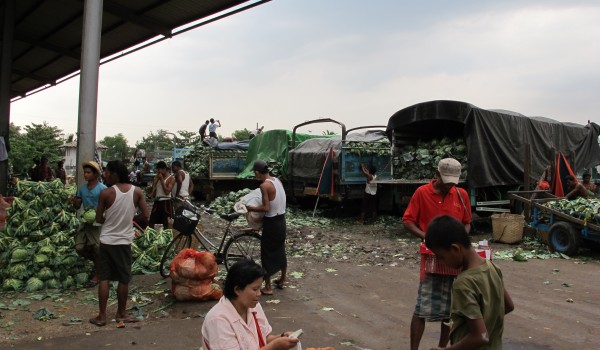
Burmese farmers are increasingly turning to chemical inputs and hybrid seed for higher-yielding food production in order to meet market demands

MBC staff person from Karen State shares his experiences to the group
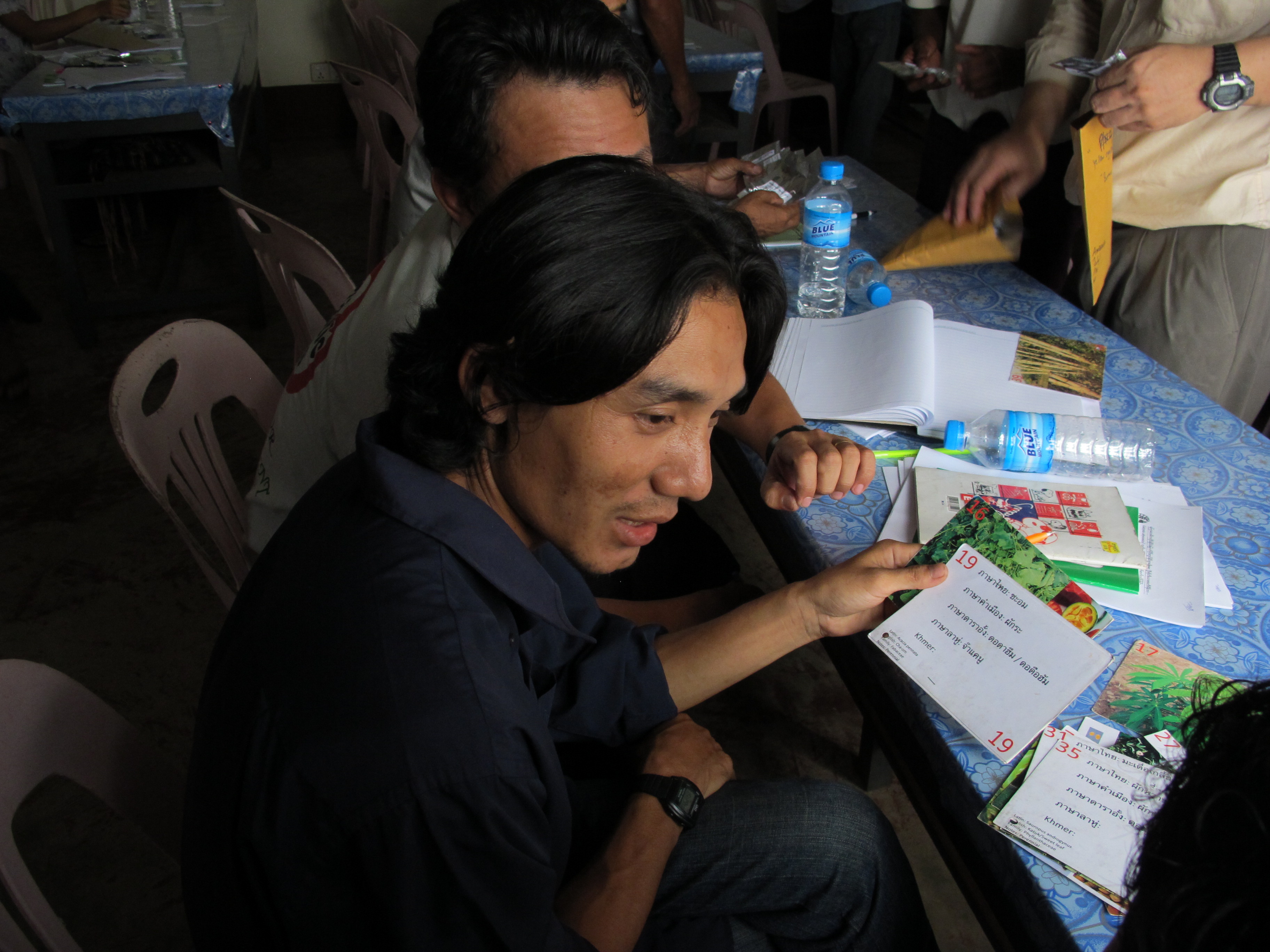
Talking plants and seeds, using flash cards of local plants
]]>
It’s always a privilege to work with local NGO staff who are the un-recognized and tireless agents of change around the world.
Check out more posts about the Cambodia workshop on ECHO Asia’s blog.

Rick (ECHO Asia's director) talking about jack beans as a green manure with a workshop delegate

Many local NGO staff lack adequate access to technical agriculture documents, so we publish a variety of topics in Khmer, Burmese and Thai.
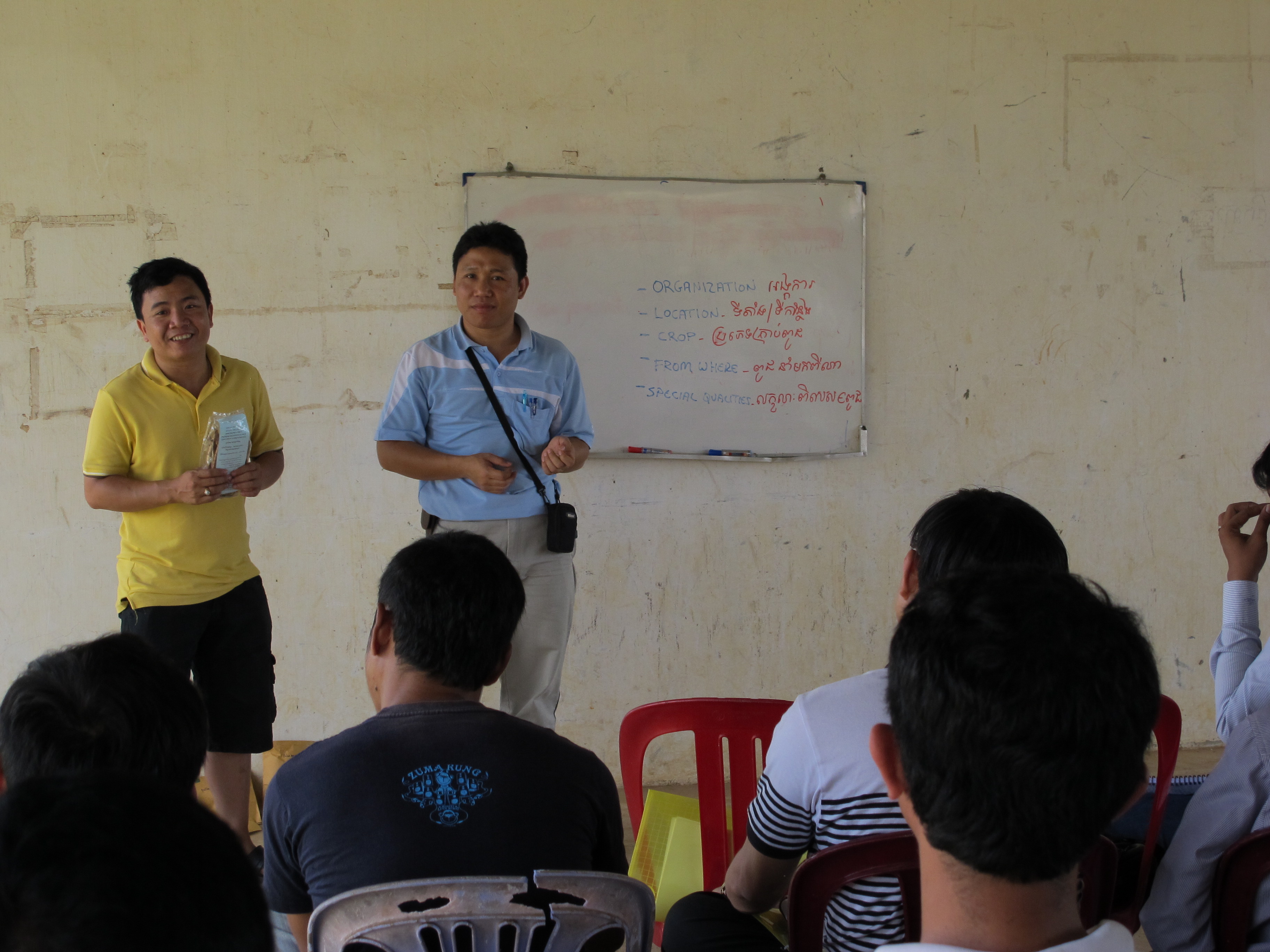
Thida (left - our Khmer partner) translates as Boonsong (right) talks about the cowpea seeds he brought to swap. Â Boonsong, based in Chiang Mai, is an expert on natural farming methods for pigs

The seed exchange - we brought in a variety of vegetables and nitrogen-fixing green manures
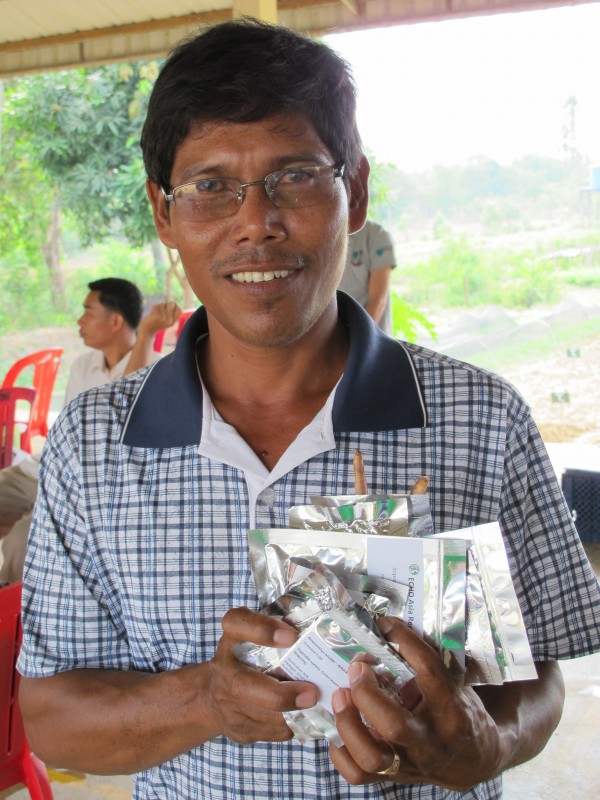
Cencha, general manager of Jumpah Center, with his seeds
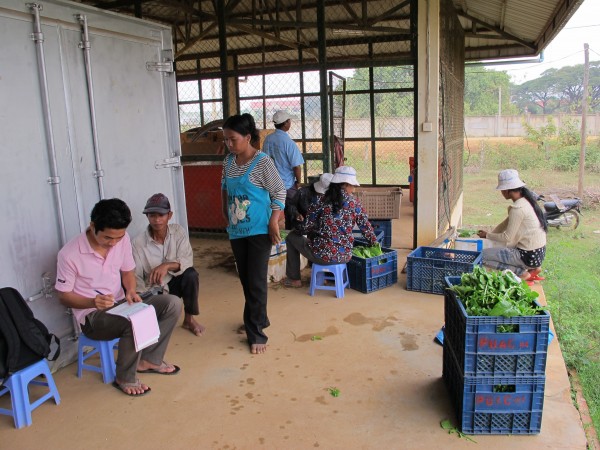
Samrit (in pink shirt) tallying organic produce brought in by local farmers to PUAC for distribution to hotels and restaurants in Phnom Penh
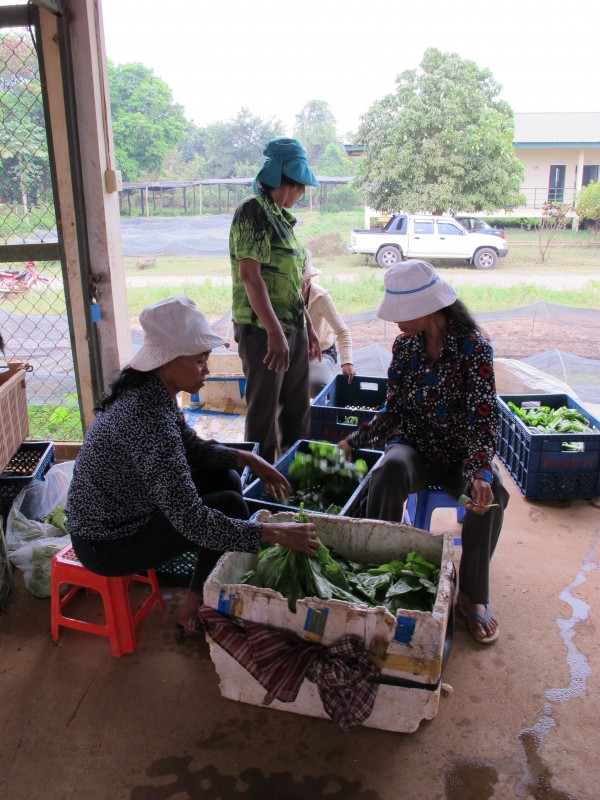
Women farmers sort through the fresh produce they bring in three times a week
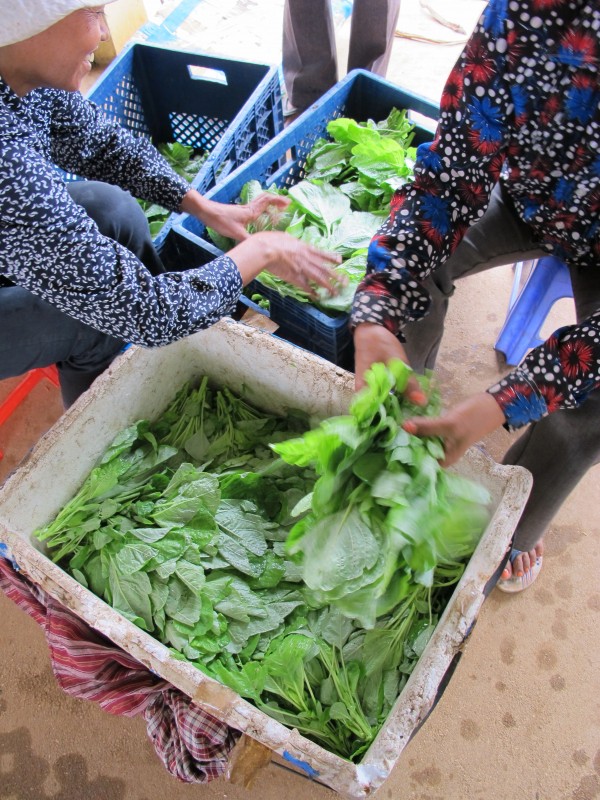
Beautiful greens are sold at hotels and to the few organic outlets in Phnom Penh - allowing farmers to earn above average wages using far less chemicals than conventional methods
Again – many thanks to my supporters as my trips to Phnom Penh and Yangon wouldn’t have been possible without your generosity.

Sunrise at Angkor Wat in February

All hands on deck for the seed cleaning demonstration in Yangon


My friend Betsy (from ye olde ECHO USA days) shows how to graft fruit trees

Wah and Team Thailand measuring out oil for the soap-making course.

Dried moringa leaf powder added to the not-yet-solid soap makes a great facial soap...I'm still waiting to test mine out.

Kirk and Esther from Laos hanging out with the finished product. Â Partners teaches soap-making in Karen and Shan refugee camps along the Burma/Thai border...it's cheaper than constantly ferrying in store-bought bars.Â

With my favourite German, Klaus Prinz. He's been in Chiang Mai for almost 50 years so he makes an awesome eating buddy!

Welcome to Mae Jo University's worm centre!

We checked out a local university's worm centre...where tonnes of plant rubbish is gobbled up by worms. Â The worm juices are then collected and sold as fertilizer in organic food growing.


So Thai...check out the cutesy worm with cowboy hat (the university's mascot) on a bottle of worm juice.